
After you speak, MirrorSay shows your original words and a natural-expression version. The useful question is not simply “Was I wrong?” It is: Can the same meaning be expressed more naturally or with less effort?
The app is a mirror, not the final authority on your voice. Use the result card in this order.
Compare the two layers instead of copying the bottom line
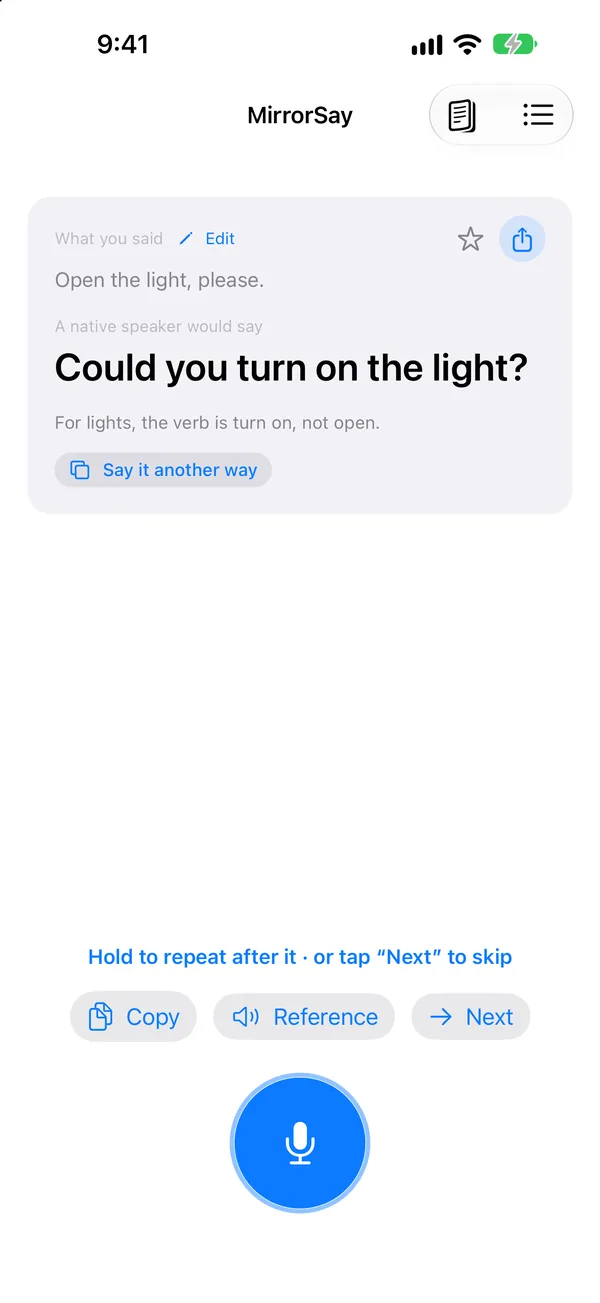
- Meaning: Are the people, time, certainty and attitude still yours?
- Structure: Does the new sentence remove awkward word-for-word translation?
- Word choice: Does *really like* fit your intention better than *very like*?
- Situation: A teammate, a customer and an examiner may call for different choices.
If the rewrite changes your meaning, do not memorise it. Correct the starting sentence or add the missing context in another attempt.
Editing the original fixes recognition, not the target wording
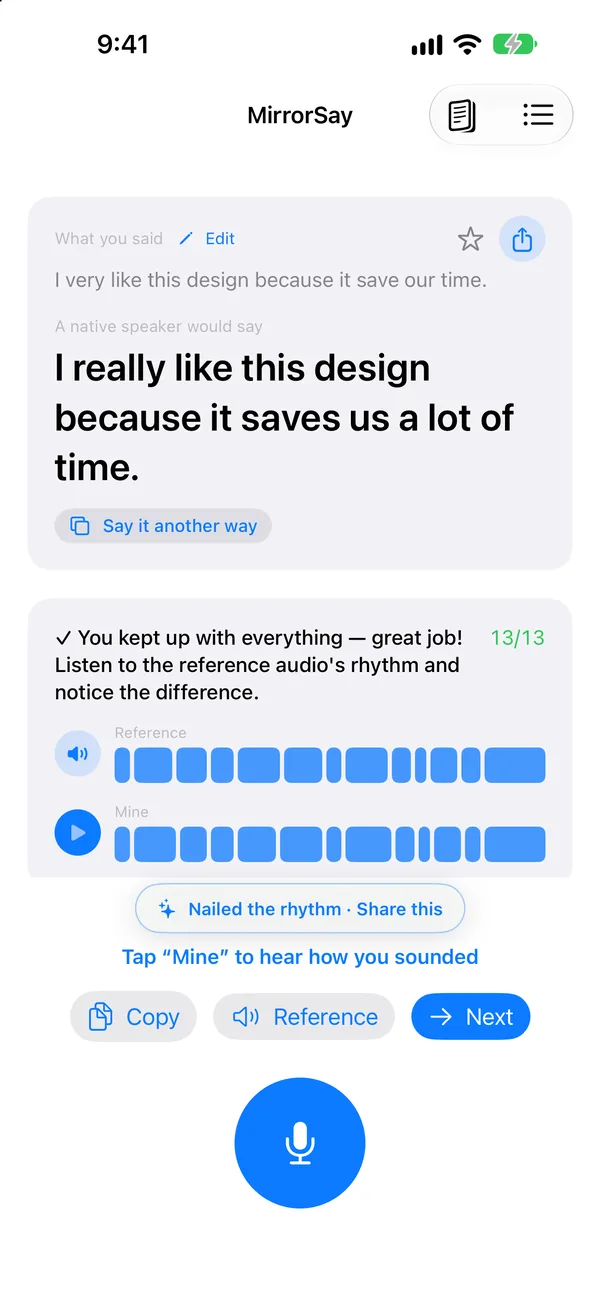
If you said *this design* but recognition produced something else, use the edit option beside your original. MirrorSay then works from the corrected input.
This is useful for names, product terms, numbers, and words lost to noise or unclear recognition. It also lets you repair a missing word that changed your intended meaning.
It is not the route for preserving a fixed text. Use Add sentence for a quotation, script, worksheet line or any wording you must repeat exactly. Free rewriting and fixed-text practice serve different goals.
Turn one change into usable English
Choose one change worth remembering. From *I very like this design* to *I really like this design*, the useful takeaway is not just “very is wrong”. Try the pattern with your own content: *I really like this idea.* *I really like the location.*
- Explain the original meaning in your own words.
- Identify one helpful difference in the rewrite.
- Listen to the whole natural sentence, not just the changed word.
- Shadow it, then make one new sentence for your situation.
- Star it if you genuinely plan to practise it again.
When not to accept the suggestion automatically
- Fixed texts: Lyrics, scripts, class materials and exam audio need their original wording.
- Deliberate tone: Humour, diplomacy and emphasis depend on the listener.
- Facts and commitments: Dates, prices, numbers and responsibilities must not change for fluency.
- Specialist language: Check team conventions and technical terms before adopting a rewrite.
The best result is not a collection of impressive phrases. It is a sentence you understand, agree with and can say when you need it.
Continue with word-by-word shadowing and replay, or learn how to add a fixed English sentence. If your version supports starting in your native language, you can also begin with your intended meaning and compare the English suggestion.